
Compost for the Garden.
We post about things like reading the Bible with an expansive lens, learning to listen to multiple perspectives, and hearing old stories in fresh ways. We hope it helps your faith reconstruct into a beautiful garden. Not every post will be for everybody, and that’s okay too. You get decide if it’s fertilizer or if it’s just sh**. Then stay tuned for the next one.
Want to receive these thoughts, stories, and questions via email? Subscribe here.

I used to think the Bible said I was “very good.”
I used to think the Bible said I was “very good.”
Good. Tov in Hebrew. In Genesis 1, God keeps seeing the good at the end of each day of creation. And then day 6, for the first time, tov has an intensifier. It is not only tov, it is tov me’od. Very good. It’s a noticeable shift. It reads like humans are the pinnacle of creation. And if humans are so special, I must be so special.
But the text never actually says that. It does say that we are made in the image of God, and have a role to play in creation. But the very good part? That’s not about me. It’s not even about us. It’s about all of us. Everything.
“God saw everything that he had made, and indeed, it was very good.” - Gen 1:31
Everything. Our modern western capitalistic minds so often miss this. Sure, everything includes me. But it is certainly not only me. Or only my family. Or only Christians. Or only my community. It’s everything.

I Read a Quarter of the Bible and Thought I Knew It
I spent years in the Bible and still missed how much of it is about justice.
I was immersed in an individualized concept of faith, in which I need to have my quiet time every day so that I can grow closer to God. I thought that way for many years. And when I got out my Bible and my journal, I would often either read the letters of Paul, so I could think more about my sins or my salvation, or Psalms, so I could use its gritty language about my feelings.
Which means I felt like I read the Bible a lot, and knew the Bible well, but I was actually reading more like a quarter of it. I would hardly spend time in the Gospels, much less in the Torah or the Prophets. Without realizing it, I was skipping much of its message, especially what it has to say about communal responsibility.
What Joseph Actually Said
“But as for you, you meant evil against me; but God meant it for good, in order to bring it about as it is this day, to save many people alive.” - Genesis 50:20
Ironically, this verse describing how God was working out good in the midst of evil has been used to do harm (evil) to a lot of people. It gets used as proof that we must trust in the plans of God, and therefore maintain rose-colored glasses of faith in the midst of every evil we encounter.
Let’s look at some of the context that gives us other options.
This is something Joseph says about his own life, in hindsight. It’s not something he is saying when the bad things are happening to him, nor is it something someone else is telling him about the horrible things that have happened to him. These are Joseph’s words of meaning-making about his own story.
A Christmas Gift: Reclaiming the Nativity
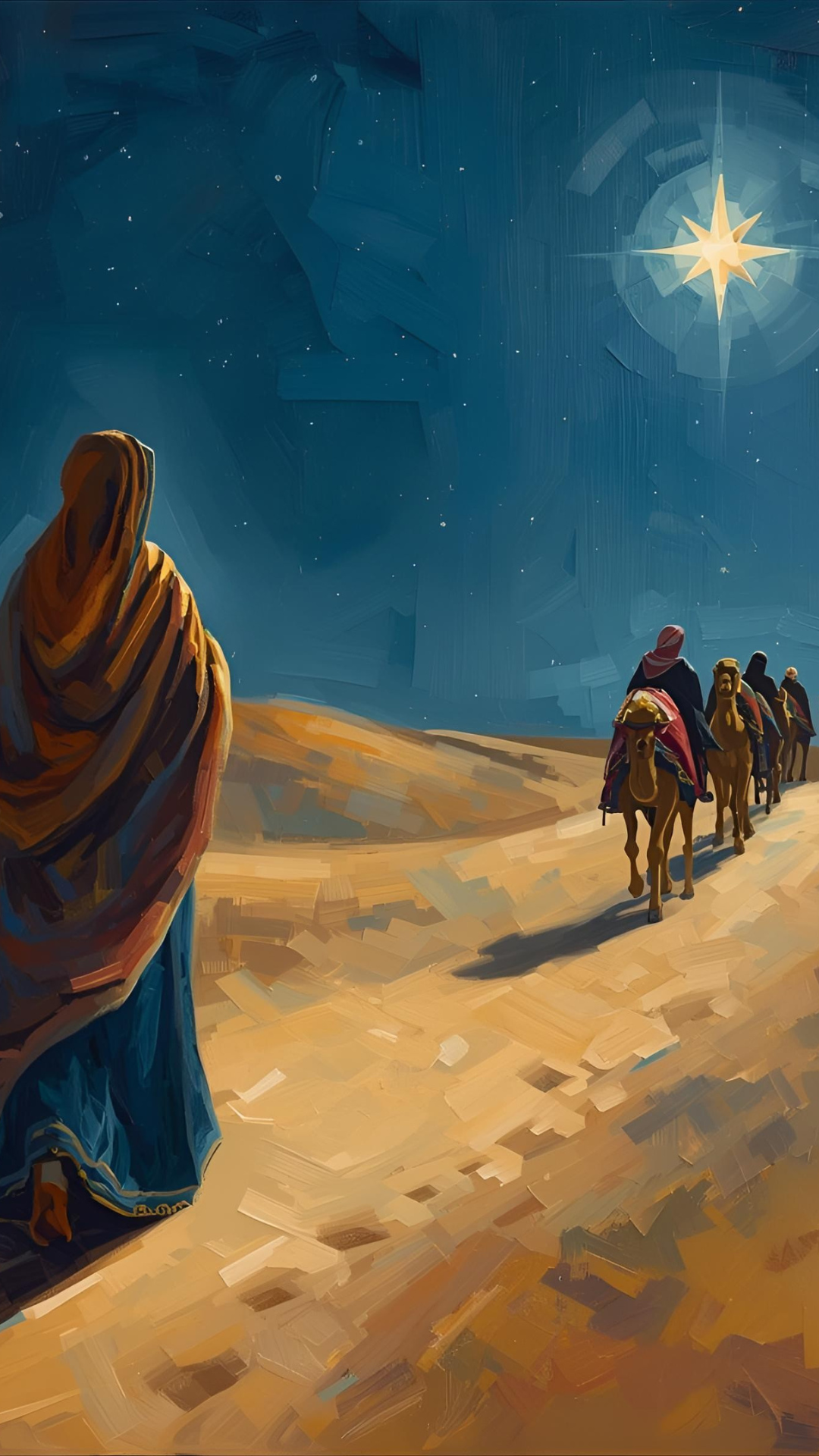
Most of us know the Christmas story so well that we stop listening for it.
But sometimes, when we slow down and tell it differently, it opens again. In that spirit, we want to offer you a reimagining of Luke 2 and Matthew 2.
Colette’s Story: A Breath of Fresh Air
Finding 40 Orchards and engaging in a Circle was a breath of fresh air for me as I longed to engage Scripture in new ways. Traditional Bible study, especially with a “teacher” or “facilitator” leading, had begun to feel stale. I have been a person of faith for most of my life, and as with life itself, my faith has matured and evolved over the years. I found myself on a quest to engage and explore Scripture in new ways. I also needed a safe place to wrestle with faith and culture, which had become tangled in ways that left me disheartened.
40 Orchards has provided another community where I can be with others who are also on a quest for “more,” people who are open to navigating and investigating Scripture with imagination and curiosity.
We are living in a time when I have often felt challenged and disheartened by actions that do not mirror the way I understand Christian faith, particularly as a woman and a person of color. Being in Circle has renewed my sense of awe and wonder in Scripture. The more I engage it, the more it confirms for me that the Gospel message is about love, light, and being “Good News to ALL.”
Claire’s Story: Rebuilding Faith on My Own Terms
To come back to some sort of faith, I needed to be allowed to not believe in God. At least for a while.
The faith of my childhood and young adulthood, like many others had completely failed me. I looked to leaders who professed to love God, who said they believe in what I was taught and frankly, did the opposite. They didn’t seem to care about the poor, or the vulnerable. They rejected anyone in need, anyone on the outskirts all in favor of more money and more power.
One of the things that I heard someone say once is that it wasn’t people who were on the edge who’d been leaving the church, it’d been those who were all in. I was so all in. I’d been a co-emcee at Campus Crusade in College (I wasn’t allowed to be the only emcee because “GASP” I was a woman …) I’d gone to church at least twice a week for as long as I could remember, and you’re looking at the recipient of a Timothy Award (IYKYK).
I was SO good at being a Christian.
But, at some point, what I had been taught, didn’t match what I was seeing

Sana’s Story: Reclaiming My Faith with 40 Orchards
I have a complicated relationship with the Bible. The church I grew up in had Bible study for kids and adults, but I have no real memory of them. (They must not have been memorable. 🙂) But I knew as a child the major stories and characters: Adam and Eve, Cain and Able, Noah and the Ark, Moses and his people, David and Goliah, Ruth and Esther, Samson and Delilah, Jonah and the Whale, Jesus, Lazarus, etc. My parents read the Bible – not to us but to themselves – and I read the Bible by myself but I didn’t understand much. I still own the Spirit-filled, King James, leather bound Bible my then boyfriend gifted me for Christmas in 1995! It lives on my bookshelf 30 years later as a relic of my past life.
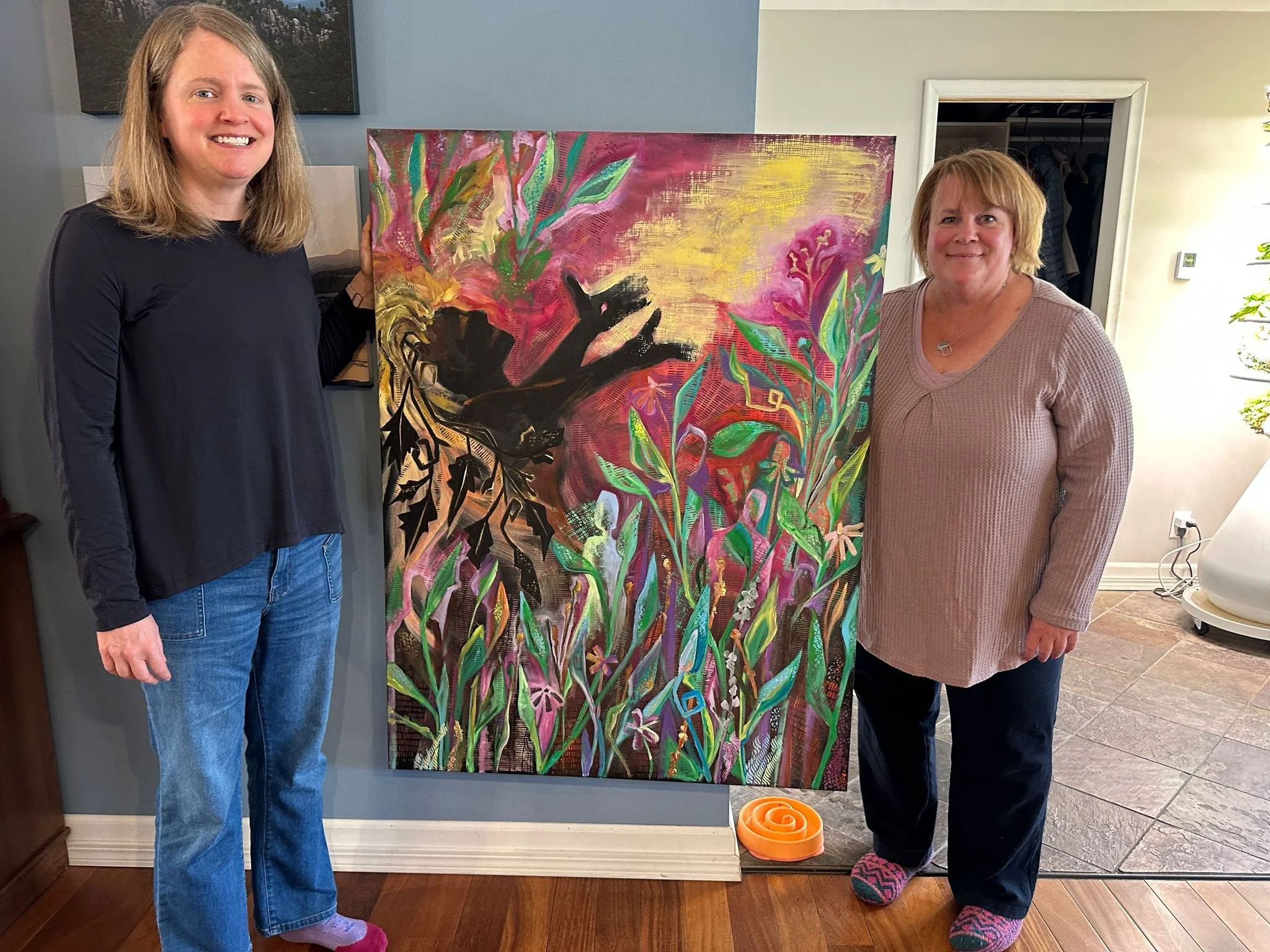
Meagan’s Story: Finding Footing Again After Loss
In 2020, I lost the person closest to me, my sister, to brain cancer. Amid the disorientation of grief, I felt completely unmoored, and like I had been sold a bill of goods about what the Bible promises. The verses I had leaned on for comfort my whole life no longer rang true to my experience. I didn't want to hear it, couldn't pretend to believe it, if it wasn't true for someone suffering and dying of cancer. The loss of confidence in my understanding of the Bible was another loss to grieve- until 40 Orchards.
After 2 years of the Cohort, I'm trusting in our sacred text in a new way. This isn’t because Steph and Lisa have given me some magical answers. Through the safety and wisdom of 40 Orchards community, I've learned to ask questions, not memorize answers or creeds, and realized that's where I can find my footing again.
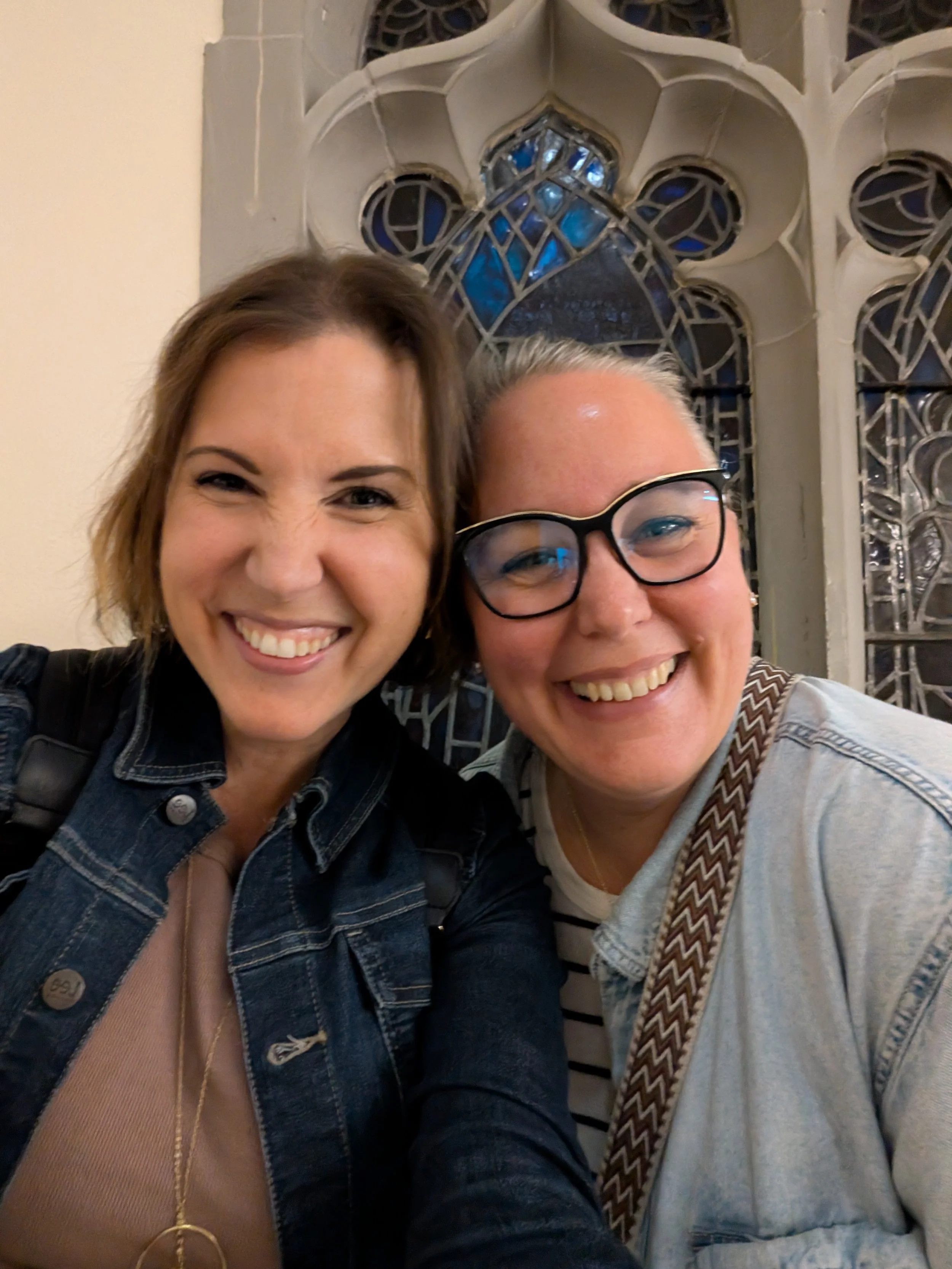
40 Orchards’ Story: Keep This Work Alive Into 2026
Many of us know the weight of religious harm: fear, shame, exclusion, and the experience of Scripture being used against us rather than for our flourishing. These experiences shape how we show up, how we read, and even how we understand our own worth.
They are not only individual experiences. They exist within a wider religious landscape where Scripture is too often used to limit, to silence, or to consolidate authority. This same landscape continues to fuel the rise of Christian nationalism, which depends on certainty, hierarchy, and a single way of reading the text.
At 40 Orchards, we create spaces where curiosity is welcomed, voices long silenced find space to speak, and Scripture becomes a source of insight rather than injury. Learning happens through shared wisdom rather than imposed authority. In a time when Scripture is weaponized in public and private life, this work matters. It is a quiet but powerful act of resistance.
This year, as we close out 2025, we need your help to sustain this work. Our goal is to raise $25,000 by December 31, the amount necessary to enter 2026 with stability and continue offering these generative spaces.

From Anxiety to Action: Reclaiming Jeremiah 29:11
Few verses have been printed on more graduation cards, journals, and pillows than Jeremiah 29:11. But for many of us, the words have caused more anxiety than comfort.
“For I know the plans I have for you,” declares the Lord, “plans to prosper you and not to harm you, plans to give you hope and a future.” — Jeremiah 29:11 (NIV, the preferred greeting-card translation)
The harm is not the cards themselves, but the theology they often reinforce.
In the evangelical world of my (Steph’s) young adult years, I had journals full of anxious questions like, What is God’s plan for my life? What if I miss it? What if I take the wrong path? I believed God had a single, perfect map hidden somewhere in the heavens, and my job was not only to discover the X on the page, but also stay on the right route to get there.
That version of Jeremiah 29:11 pressed me to pray, work hard, and discern God’s will so I wouldn’t be the one to mess everything up. But the worst part wasn’t the anxiety itself—it was how that anxiety pushed me to narrow the focus onto myself.